My work.
Brand builds and the systems behind them, from client launches and what runs at Best Friends to a couple of concepts and two things I made for fun.
Company Brain.
It knows how the business runs and connects to the software the team already uses, so questions get answered and routine work gets done from one place.
- The problem
- The team hunts for answers and clicks through the same five tools to do the same tasks.
- What I built
- One source of truth for brand, pricing, policies and numbers, wired to the tools already in use. A person approves anything that matters.
- Where it stands
- Running at Best Friends, where it did 3,000+ hours of work in nine weeks from 160 hours of my time.
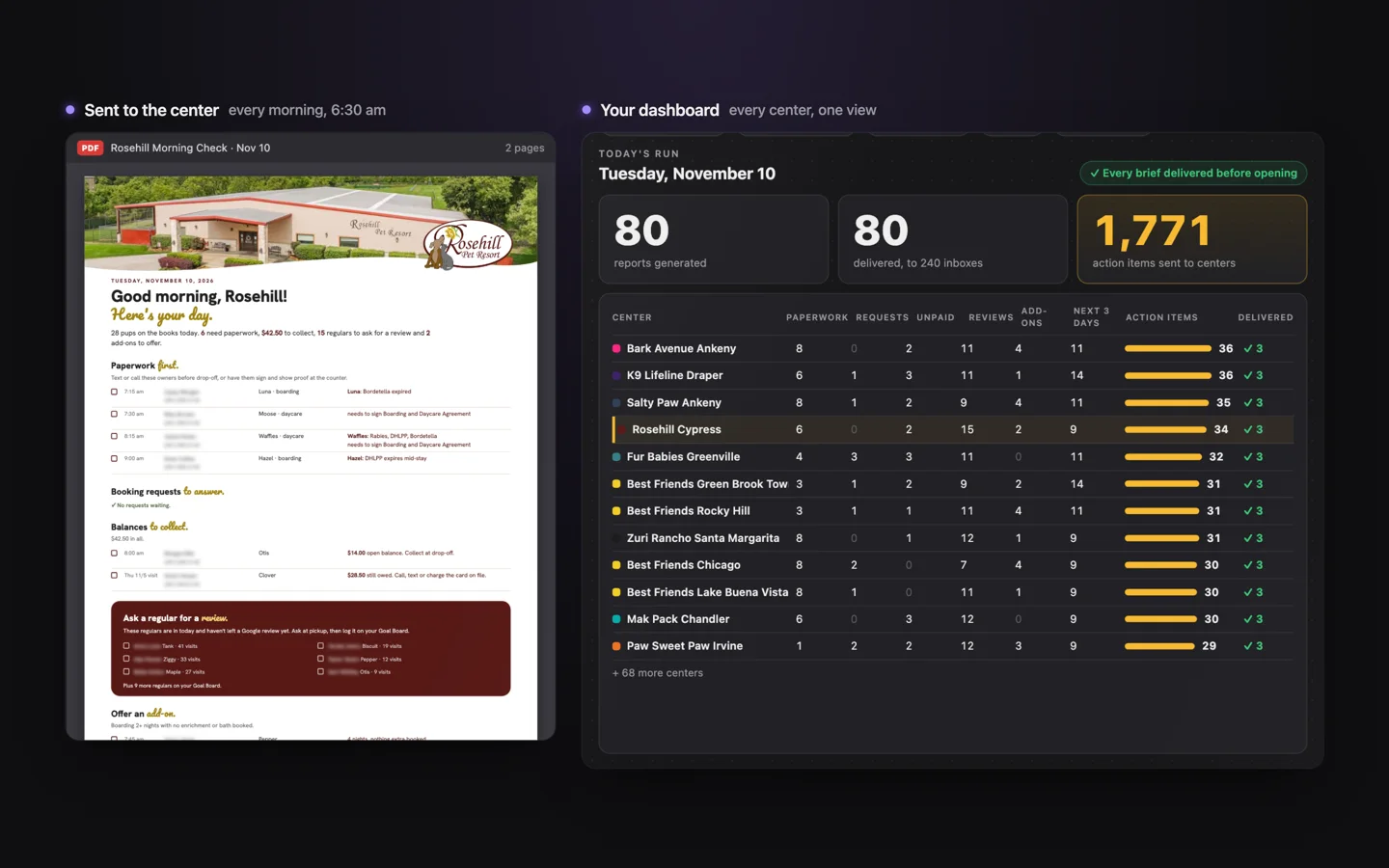
Automated email reports.
Reports built around how your business runs, sent to everyone who needs them, when they need them. Each one ends in a short list of what to do today.
- The problem
- The numbers are already in your systems, spread across dozens of screens. Nobody has time to pull them before opening, so problems get found at the counter with a customer waiting.
- What I built
- The Daily Center Brief. Every morning it reads each center's booking system, applies that center's own rules and emails the desk a checklist in the center's own brand: paperwork to fix, balances to collect and regulars to ask for a review.
- Where it stands
- Live at a pilot center since November 10. Their first reaction: “It looks AWESOME. I have absolutely no notes.” It's built to give each desk 20 to 30 minutes back every morning.
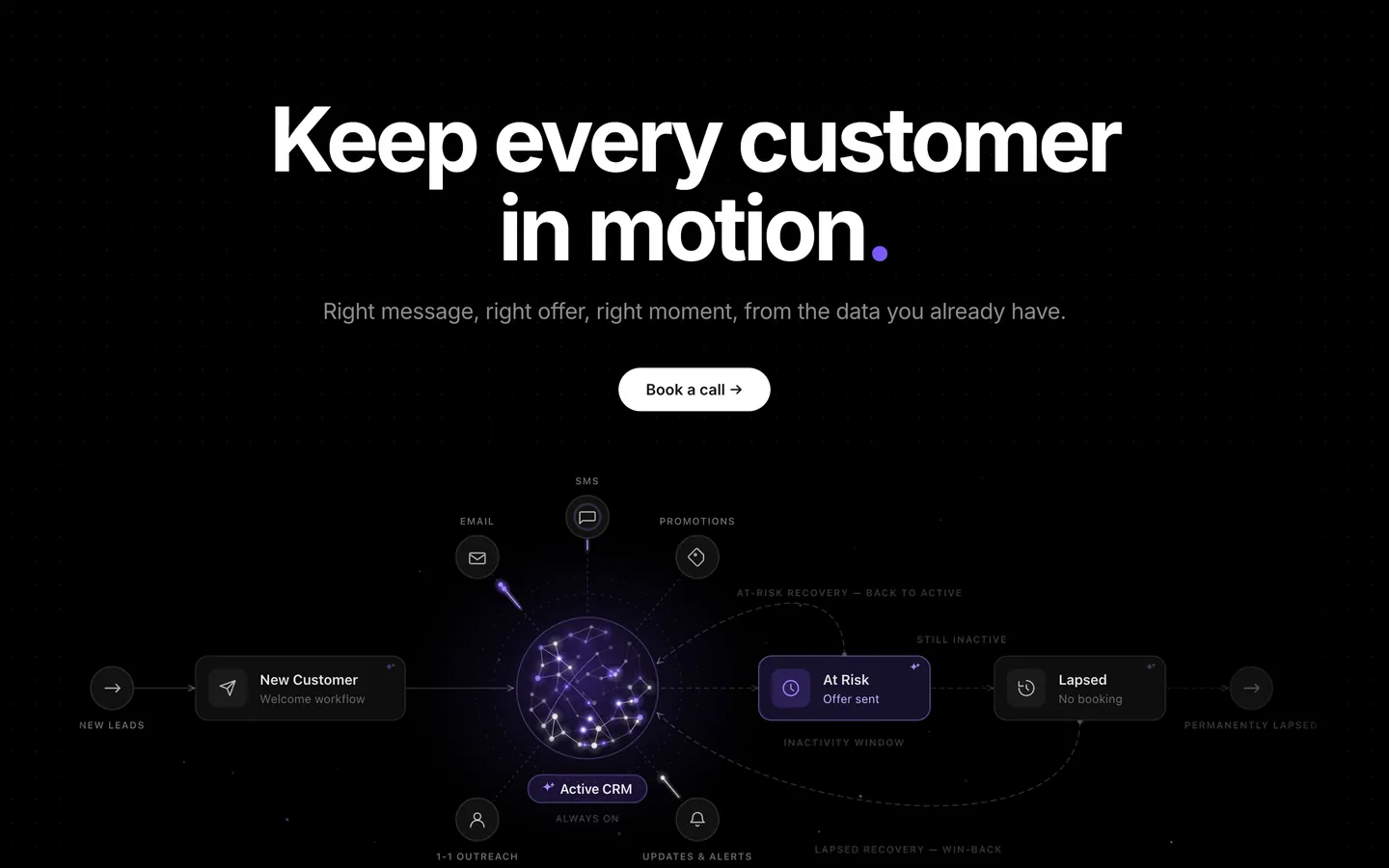
Lifecycle marketing.
It wins new customers and wins back the ones who drifted. Runs in the background until someone replies, then a person takes over.
- The problem
- Most businesses pay for a CRM and use it to blast emails. New leads go cold and lapsed customers never hear from anyone.
- What I built
- Lead nurture and win-back sequences that run on their own, with a human stepping in the moment a customer answers.
- Where it stands
- Running across 80 locations. 31% of new leads convert and 10% of lapsed customers come back. Tracked CRM revenue grew 50x in year one.
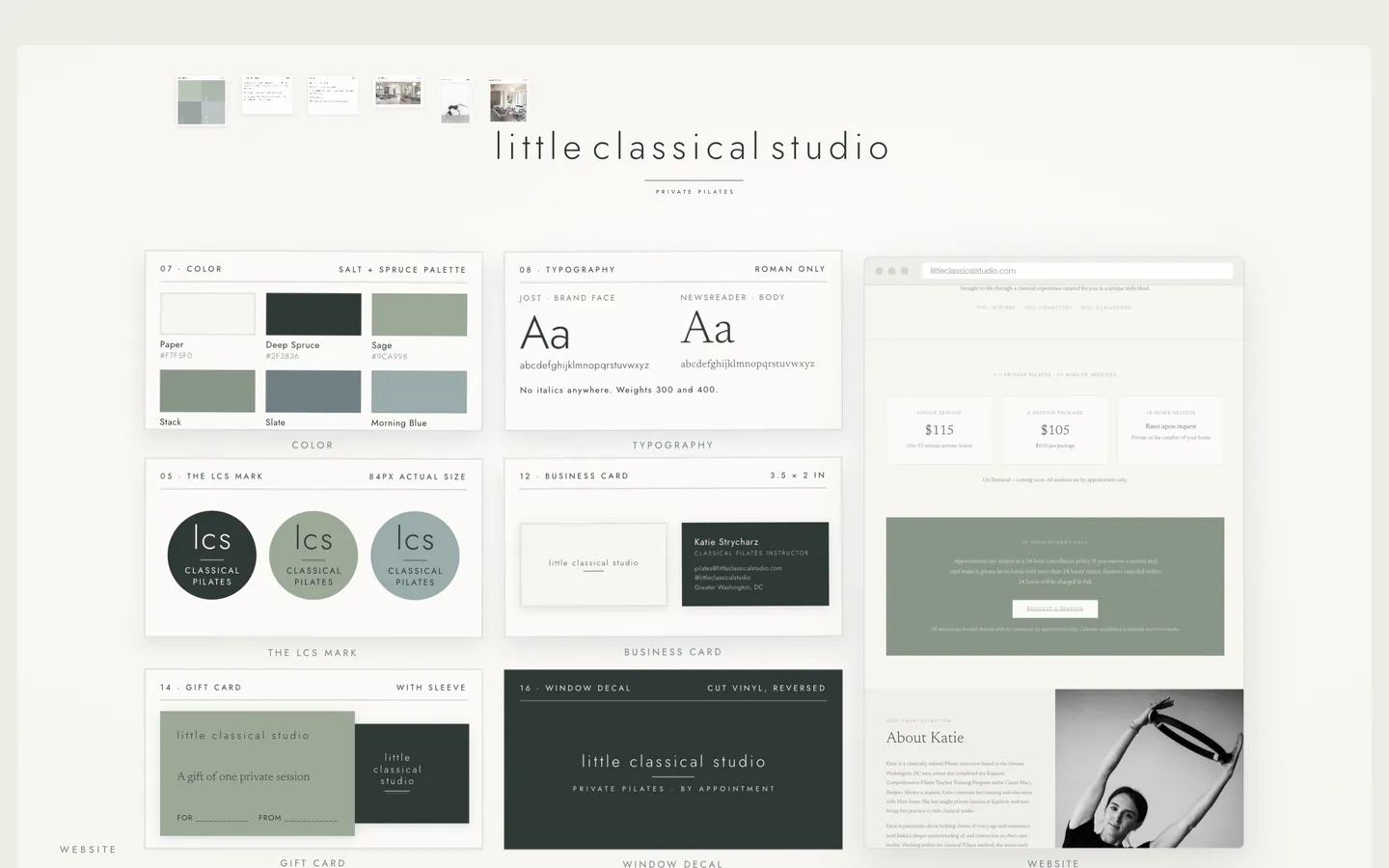
Custom brand build.
A full identity, brand kit and website for a private Pilates studio, built on classic brand fundamentals with the newest AI design tools doing the production work.
- The problem
- A new private studio needed a brand and a site before it could book a single client.
- What I built
- The identity, the brand kit and the website, written around the owner's story, her sessions and her pricing.
- Where it stands
- Launched for Little Classical Studio. Branding complete, website in progress.
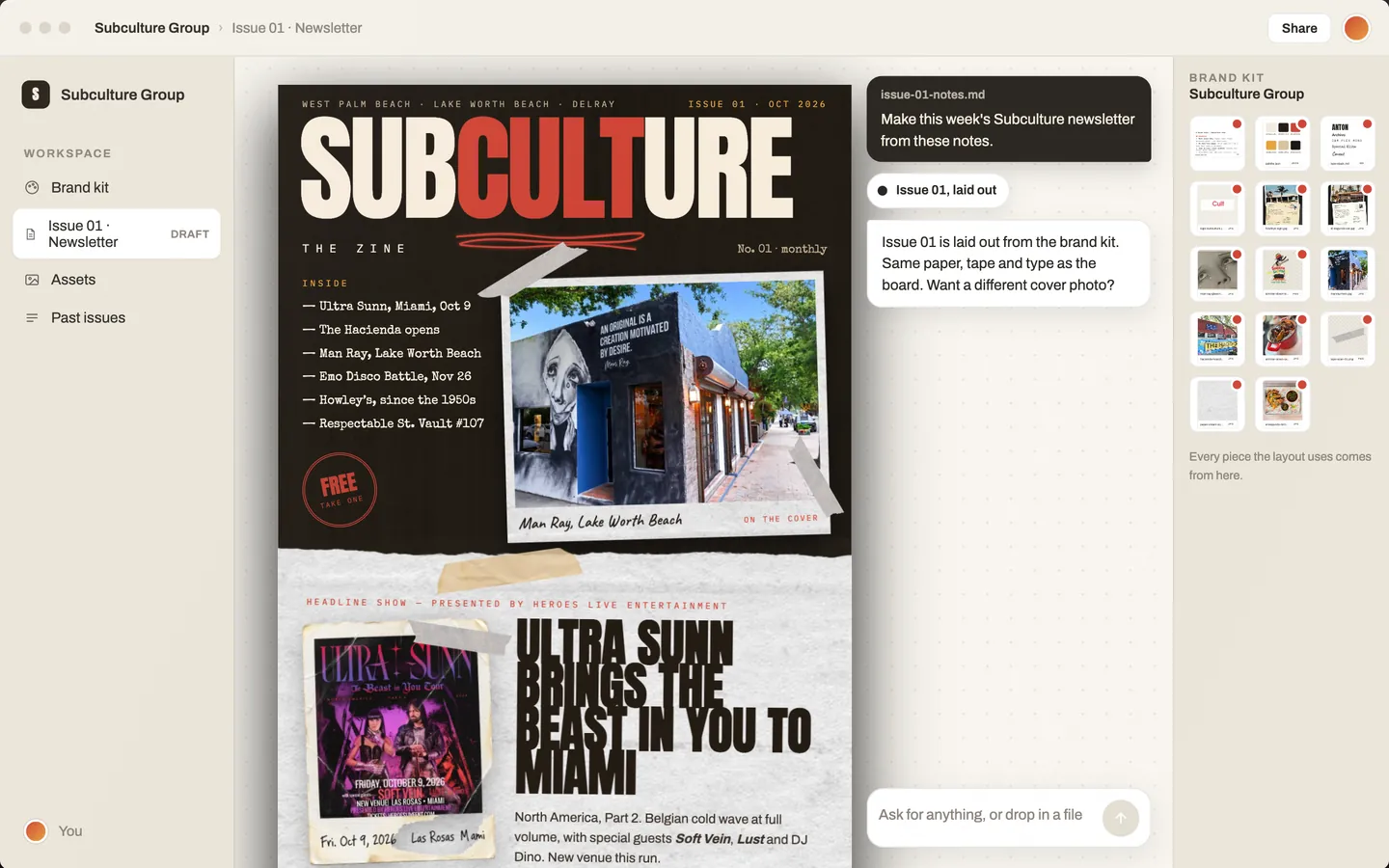
AI brand kit.
It knows your brand and every channel you market on. One line of instruction and it lays out a piece that's on-brand every time.
- The problem
- Every flyer, post or email turns into a two-week back-and-forth with a designer, and it still comes back off-brand.
- What I built
- A kit that holds the logo, fonts, photos and house rules, then builds new pieces from a one-line prompt.
- Where it stands
- A concept for Subculture, a Palm Beach zine. The same approach publishes marketing for 40+ brands at Best Friends.
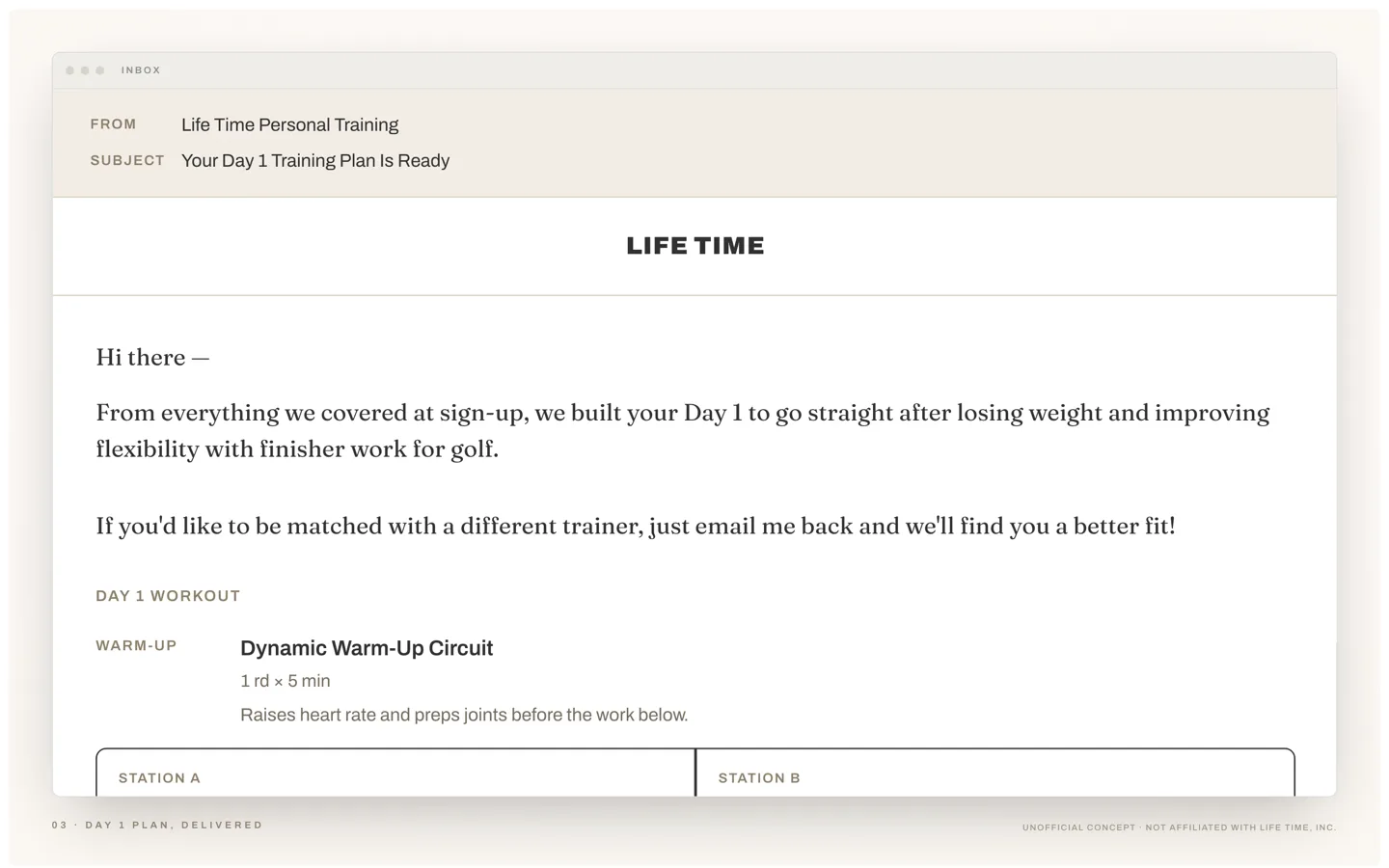
Day 1 training plan.
It turns the goals gyms collect at signup and never look at again into a personal Day 1 email, built to fill trainers' one-on-one schedules.
- The problem
- Gyms collect member goals at signup and never look at them again.
- What I built
- An intake that matches each member to the right exercises and trainer, then emails a personal Day 1 plan.
- Where it stands
- An unofficial concept for Life Time. Not affiliated with the company.
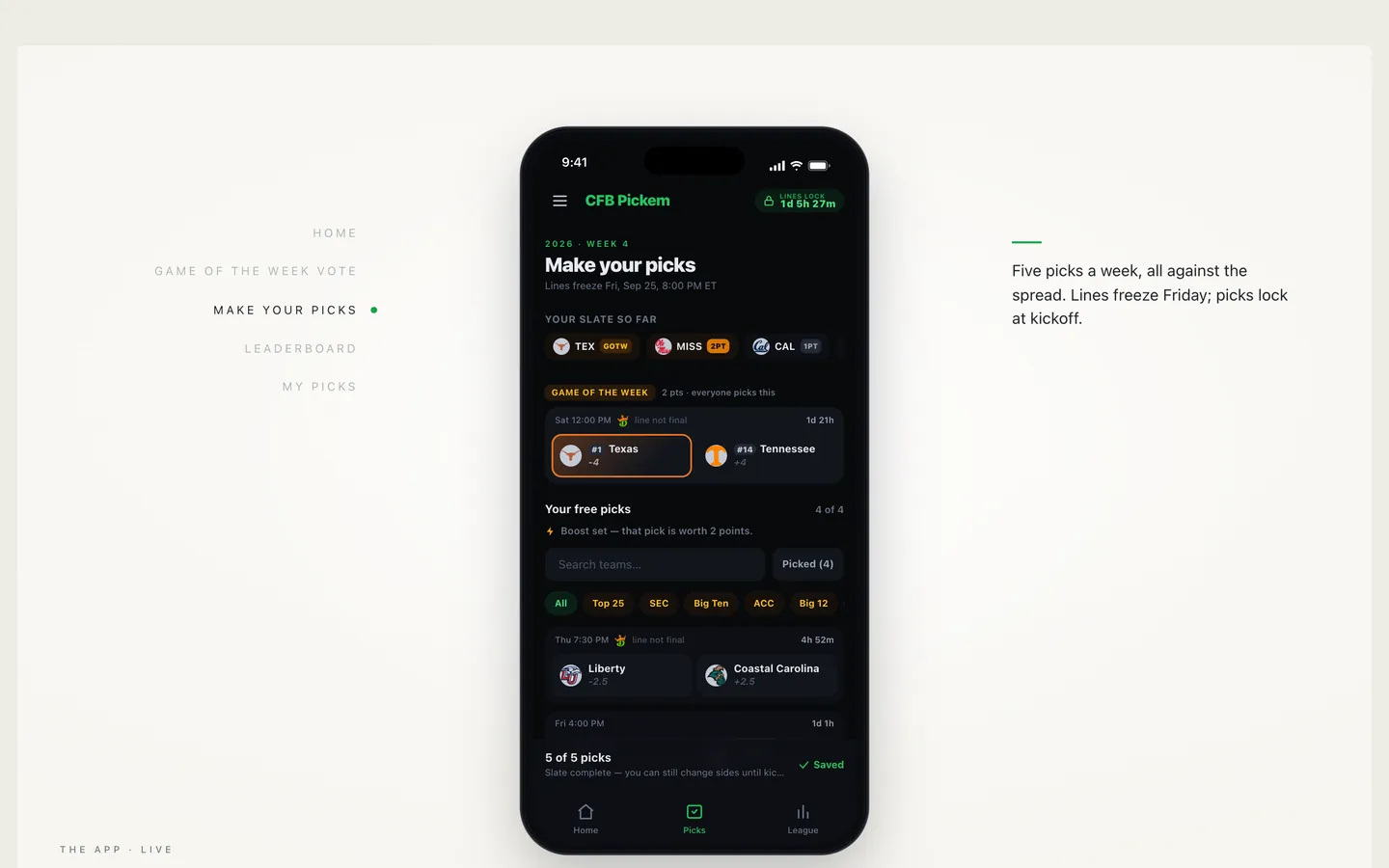
College football pick'em app.
A pick'em app built from a written spec to a shipped product. Live lines, live scores, picks and standings that update on their own.
- The problem
- A pick'em pool usually runs on a group text and a spreadsheet somebody updates by hand.
- What I built
- A phone-first app with a Game of the Week vote, five picks against the spread and standings graded straight from the picks.
- Where it stands
- Built the same way I build tools for clients: spec first, then ship.
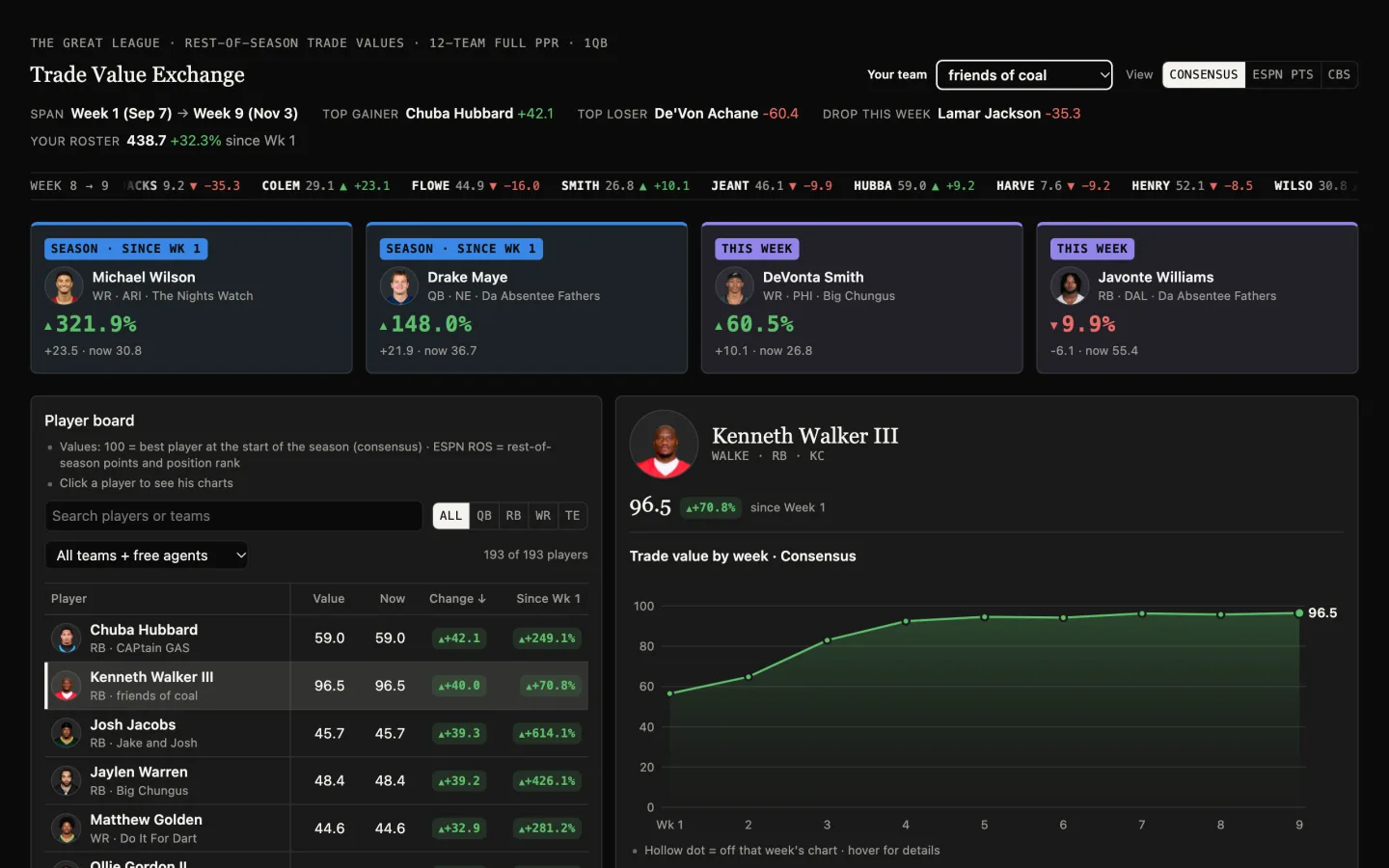
Fantasy football stock exchange.
Every player in my league gets priced like a stock, based on our league's scoring. It shows who's rising and who's falling, then builds trades that are fair to both teams.
- The problem
- Trade value charts online assume a generic league, so every offer turns into an argument about who got the better end.
- What I built
- A board that values every player on our scoring, charts how each one moves week to week and finds even trades between any two teams.
- Where it stands
- Live for my 12-team league. It's the same dashboard work I do for clients, where every chart points to a decision.
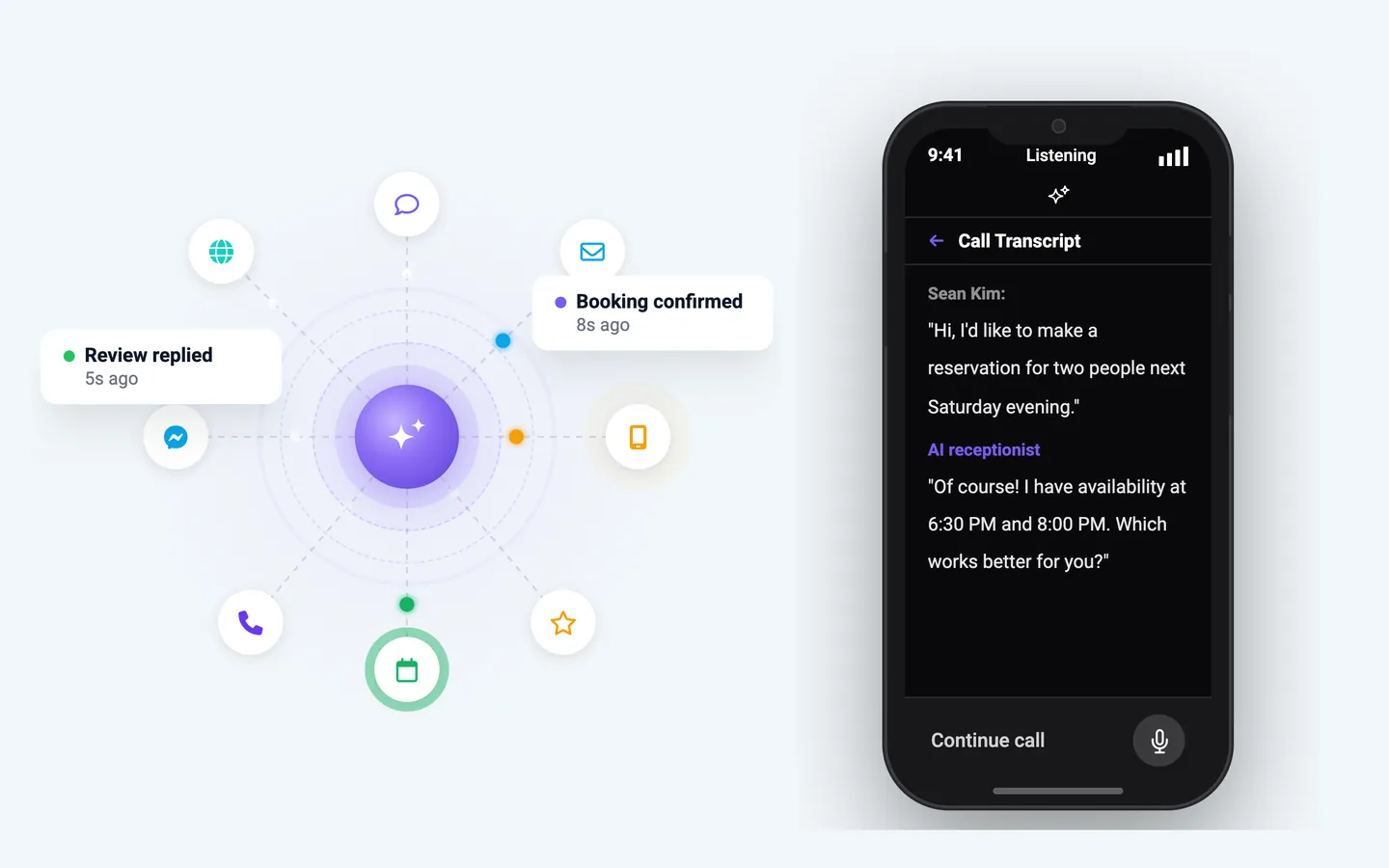
AI customer service.
It answers every chat, text and call, day or night, and books the appointment. Anything that needs a human gets flagged.
- The problem
- Staff answer the same twenty questions all day, and after hours nobody answers at all.
- What I built
- A voice receptionist plus text and chat replies, trained on your policies, pricing and hours.
- Where it stands
- Running across 80 locations. Over the holiday peak, campaign replies alone turned into 1,100 reservations.
Two ways to work with me.
For businesses. A thirty-minute call, then an honest read on whether what's eating your week is worth automating. If it is, I build it and hand it off, or build it and run it.
For hiring managers. I'm an operator who builds, not an engineer. Roles, results and what each system does are on one page.
Let's find what's eating your team's week.
Pick a time for a thirty-minute call, or email tucker@goodworktuck.com.